
Battery Swap Cabinet Mini-Program
Scan-to-swap battery cabinets for e-bikes with tracking and lifecycle management. (Demo data)
Battery Swap Cabinet IoT App Development: Background & Client Needs
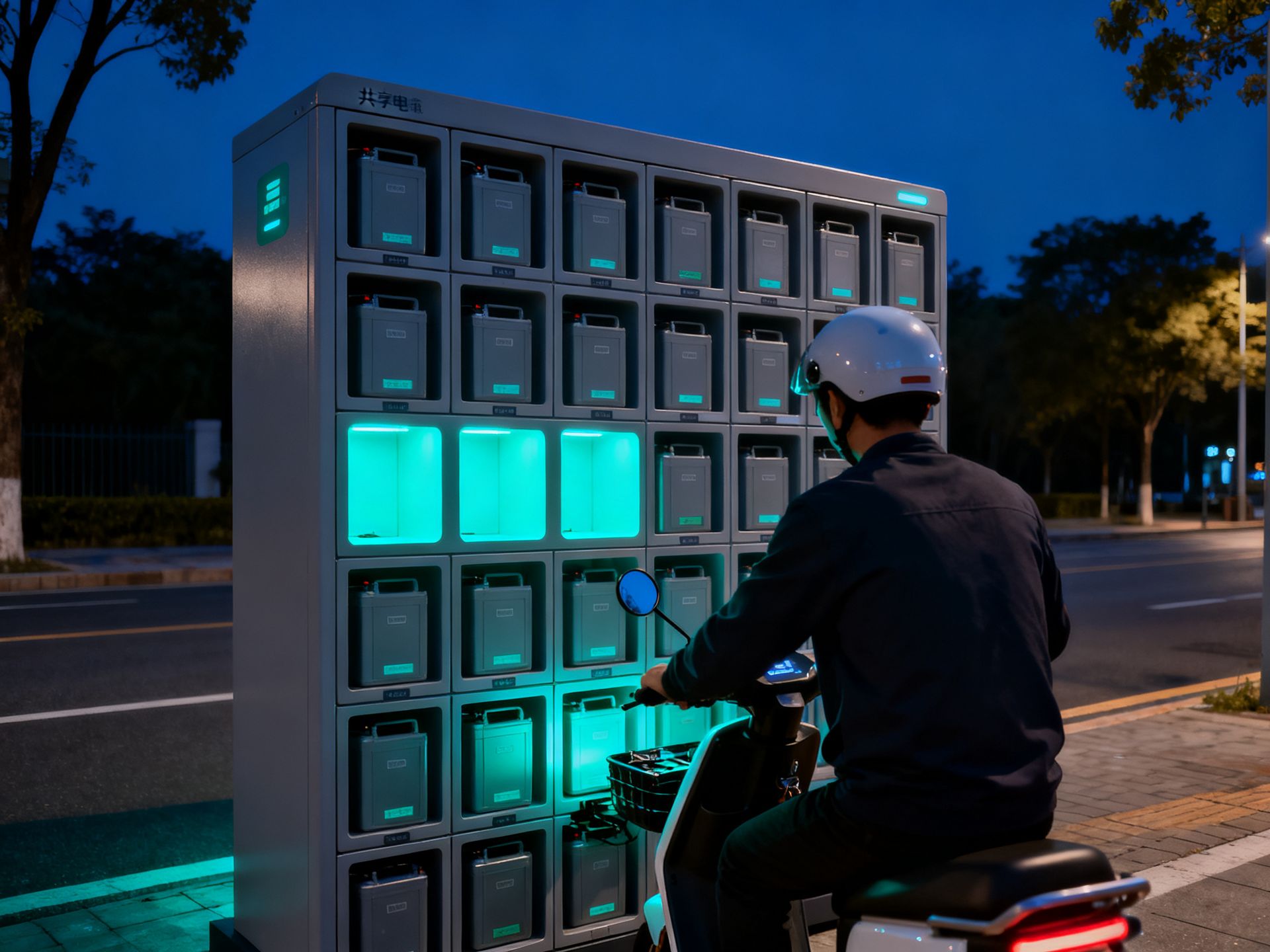
Delivery riders log long daily mileage, making energy top-up a hard need: charging their own batteries is slow and indoor charging is banned, while street-side swap cabinets complete a swap in ten seconds. A swap-station operator planning a cabinet network across rider hotspots needed a system supporting scan-to-swap, per-swap and monthly billing, and full battery lifecycle management. Juhui Software delivered this battery swap cabinet mini-program with integrated hardware-software-cloud capability.
Solution Overview: An Integrated Swap-Station Operations System
This IoT app development project targets two-wheeler battery swapping across four ends: a rider mini-program (find cabinets, scan to swap, plan management), the swap cabinet device end (slots and battery-management modules), the battery asset end (GPS and BMS reporting), and a cloud operations console (device monitoring, battery assets and billing). Riders scan, open a slot, and finish swapping within ten seconds.
Core Feature Modules
- Scan-to-open swapping: a free slot pops open on scan; riders drop the depleted battery, take a charged one — ten seconds total.
- Per-swap and monthly billing: pay-per-swap and unlimited monthly plans, with automatic renewal reminders.
- Full battery monitoring: every battery reports GPS and BMS data; health and flow trajectories remain traceable end to end.
- Auto-offlining faulty packs: batteries failing health or temperature thresholds are locked in their slots, blocked from lending, and routed to repair tickets.
- Swap heat-zone analytics: swap frequency by area guides cabinet densification and battery dispatching.
Technical Architecture Highlights
Cabinets connect over 4G to the cloud via MQTT, carrying slot control, battery status and BMS data. Each battery integrates a positioning module and BMS communication; the health model evaluates cycle count, internal resistance and temperature together. The mini-program integrates WeChat Pay, running per-swap charging and monthly entitlement verification in parallel. The cloud asset system maintains a digital record for every battery — from intake and deployment through circulation to retirement — and a policy engine takes abnormal packs offline automatically.
Results & Data After Launch
The ten-second swap experience won rapid adoption among riders, making swap cabinets their preferred energy top-up. Dual billing of per-swap and monthly plans covers both trial users and high-frequency riders, with monthly subscribers contributing a stable revenue base. Monitoring covers all batteries on the network; the auto-offline mechanism drives the chance of faulty packs reaching riders to near zero and visibly reduces battery asset attrition. Swap heat-zone data lets the operator densify cabinet placement precisely, with average daily swaps per cabinet climbing steadily.