
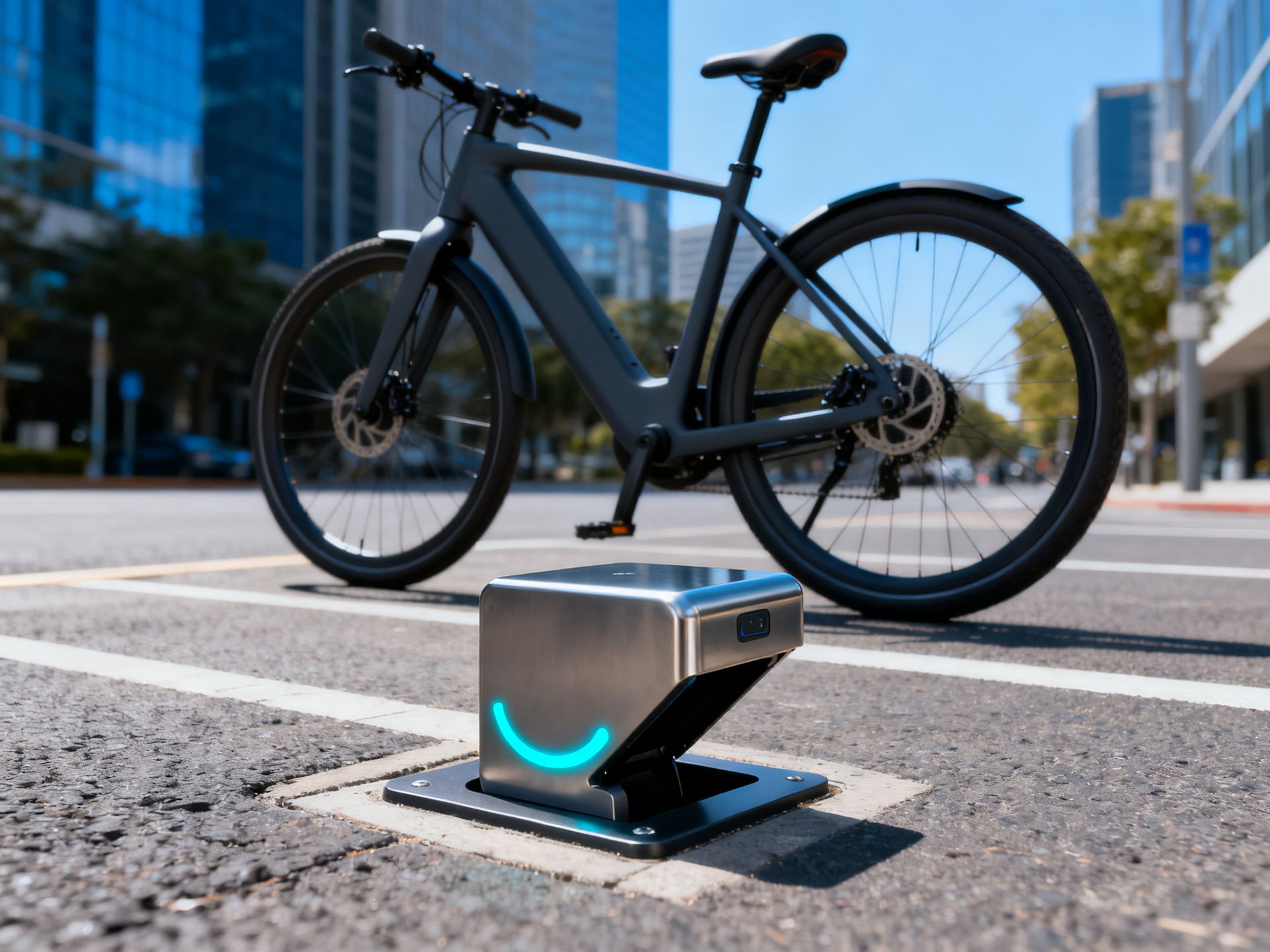
IoT System Development Cost: Charging Pile and Vending Pricing
Ask what an IoT system costs to build and the quotes you receive will span an order of magnitude. Two vendors may both quote a "charging pile management system", one at 120,000 yuan and one at 1.2 million, and neither is necessarily wrong. The difference lies in how many device protocols are integrated, how many devices the platform must handle, and how deep the operations layer goes. Unlike pure software, where IoT system development cost tracks page count, an IoT project has a full chain from device to cloud, and every segment costs money.
Our delivery experience at Juhui Software across charging pile and smart vending projects points to one conclusion: roughly seventy percent of quote variance comes from unclear scope definition, not from technical difficulty. This guide splits the cost into three layers, gives ranges you can benchmark against, and explains what pushes budgets upward.
1. Three cost layers, not one number
- Device side: communication module or gateway selection, firmware integration, protocol parsing, command dispatch and status reporting, offline buffering and reconnection.
- Platform side: device onboarding and authentication, real-time data storage and query, alert rule engine, remote control and upgrade channels, external APIs.
- Business side: operations backend, end-user mini program or app, ordering and billing, settlement and reconciliation, reporting and dashboards.
Many low quotes cover only the business layer, the visible backend and user app, while implicitly simplifying or skipping device and platform work. The result is a system where nobody notices a device going offline and inaccurate data cannot be traced. Adding those two layers later costs far more than building them first.
2. Device integration: the most underestimated segment
Effort here depends on three factors: whether the protocol is standard, whether device models are uniform, and whether control commands must be issued.
With standard protocols such as MQTT, Modbus or HTTP reporting and a single device model, integration and joint debugging typically take two to four weeks. When devices come from several manufacturers with proprietary protocols and incomplete documentation, each model may add two to six weeks of reverse engineering or vendor coordination. This is the leading cause of IoT schedule overrun, and it happens before a line of business code is written.
Control commands such as remote start and stop, parameter setting or firmware upgrade add command acknowledgement, timeout retry, batch dispatch and failure rollback. That is materially more work than plain data reporting. High-security deployments also need device certificates, mutual authentication and signed commands.
3. Where platform and business effort comes from
Platform complexity is driven by device scale and real-time requirements. Managing a few hundred devices and managing tens of thousands are different architectures: the former runs on a single node with caching, the latter needs message queues, a time-series database and sharded storage. A quote based on a generic "management system" estimate will require rework once volume grows.
Business-layer complexity follows how complete the commercial model is. For a charging pile, scan to start, time-based billing and online payment is one chain. Add time-of-use tariffs, stored-value membership, coupons, site revenue sharing, fault work orders and reconciliation reports and the work multiplies. The same applies to smart vending: scan-to-open and payment is one tier; real-time inventory deduction, temperature zone management, replenishment routing, near-expiry handling and multi-site settlement is another.
4. Typical 2026 price ranges
The ranges below cover software only, excluding hardware procurement and annual cloud costs.
- Single-site pilot: 100,000 to 200,000 yuan. One device model, core loop such as scanning, billing, payment and a basic backend, under a hundred devices. Good for validating the model first.
- Standard operations edition: 200,000 to 500,000 yuan. Multiple device models, complete operations backend, user mini program, settlement, reconciliation and reporting, supporting thousands of devices.
- Multi-site or multi-merchant edition: 500,000 to 1.2 million yuan. Revenue sharing, site and location management, work orders and maintenance workflow, open APIs for third-party platforms, architecture supporting tens of thousands of devices.
- Custom hardware or deep protocol rework: added on top of the relevant tier, depending on tooling and firmware scope.
These are industry ranges, not fixed prices. Two projects inside the standard operations tier can legitimately differ by thirty percent because of device model count and settlement rules.
5. What pushes the budget up
Within the same IoT system development cost tier, the five factors below move a quote upward, and most of them cannot be compressed by adding people.
- Number of device models. Each additional model brings another round of protocol parsing, integration and regression testing, growing roughly linearly;
- Real-time and reliability level. Second-level status refresh, local persistence during outages and guaranteed command delivery all require extra architectural design, and testing costs rise with them;
- Money movement and settlement complexity. Revenue sharing, multi-party settlement, invoicing and reconciliation usually require integration with a payment institution or bank channel, where joint debugging and compliance review cannot be compressed;
- Compliance and security. Cybersecurity grading assessments, domestic data storage and payment licensing bring remediation and assessment costs beyond development;
- Integration with existing systems. Where an ERP, finance or membership system already exists, interface work is often underestimated, especially when the incumbent offers no standard API and needs an adaptation layer.
6. Getting comparable quotes
Five details make IoT quotes comparable: device models and quantities, communication method with protocol documentation, the list of control commands required, user roles and business flows, and the feature boundary that must ship in phase one.
Ask the vendor to break the quote into device integration, platform and business layers, noting the device model count and functional scope each covers. Even when totals differ, you can then see whether the gap comes from scope or from rate.
IoT system development cost is fundamentally determined by how many device types you integrate and how deep the business runs, not by how polished the interface looks. Quantify those two in the planning stage and a vague total becomes a structure you can check layer by layer. Juhui Software typically runs a small-scale pilot before planning phase two, which exposes the largest uncertainty, device integration, at the stage where it costs least.